
Documents, the DP path, the right vessels, and your first sea days, all in one place. 🚢✨
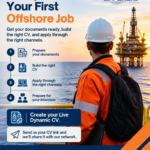
You want to work offshore, but every website says something different, and nobody tells you what to do first. 🤔 This guide gives you the order: what to collect, what to aim for, which vessels to target, and how to make yourself easy to hire.
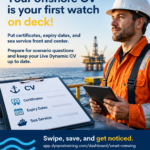
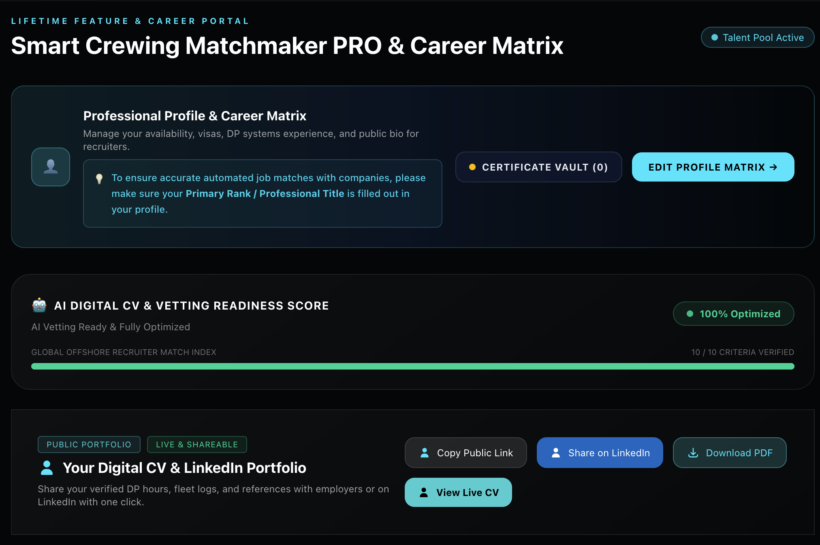
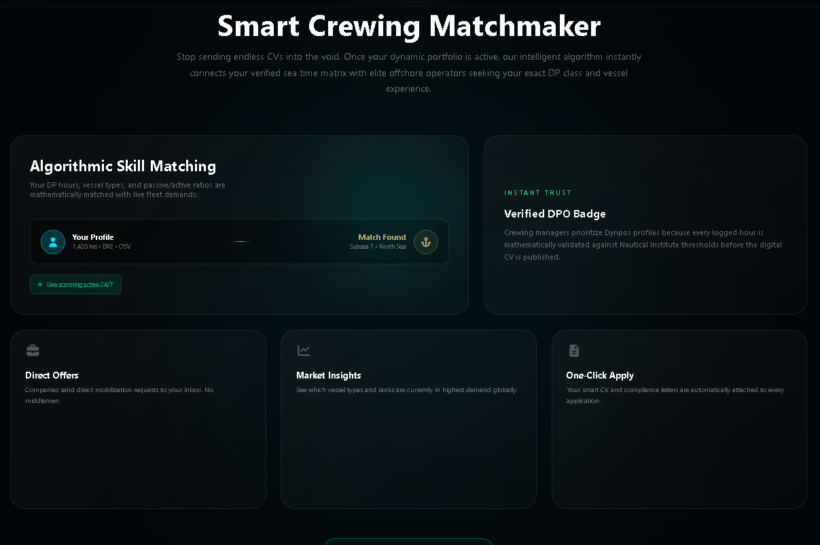
🔥 Start with your profile. Recruiters move fast, and a Live Dynamic CV makes you easy to find, easy to check, and easy to shortlist. Build yours on the 👉 Smart Crewing dashboard.
1️⃣ 📄 Which Documents Are Mandatory?
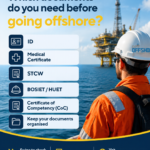
Before anything else, get the basics in order:
- 🏥 Medical certificate: ENG1 (UK) or a flag-state medical that complies with STCW
- 🔥 STCW Basic Safety Training: made up of four modules
- 🚁 BOSIET and HUET: these are not STCW courses. They are OPITO industry standards, and operators require them
- ⏳ BOSIET validity: 4 years
💡 Smart move: don’t let certificates scatter across your phone, email, and a drawer at home. Gather them in one place with the Certificate Vault. 👉 Open Smart Crewing
2️⃣ 🎓 What Rank Do I Need for the DP Path?
To start the DP scheme, you need a minimum STCW qualification:
| Department | Qualification |
|---|---|
| 🧭 Deck officers | STCW II/1, II/2, II/3 |
| ⚙️ Engineer officers | STCW III/1, III/2, III/3 |
| 🔌 ETOs | STCW III/6 |
One industry blog sums it up simply: you need to be an officer before you become a DPO.
🎒 Exception for students: if you are still in training for your STCW certificate, you may be able to complete only the Induction course and the 60-day familiarization before you qualify. Rules can change, so confirm the current requirements with the Nautical Institute.
🎯 Prepare early: check the Training Centre so you are ready when the time comes.
3️⃣ 🚢 Which Companies and Vessels Should I Target?
According to one industry blog, here is how the vessel types break down:
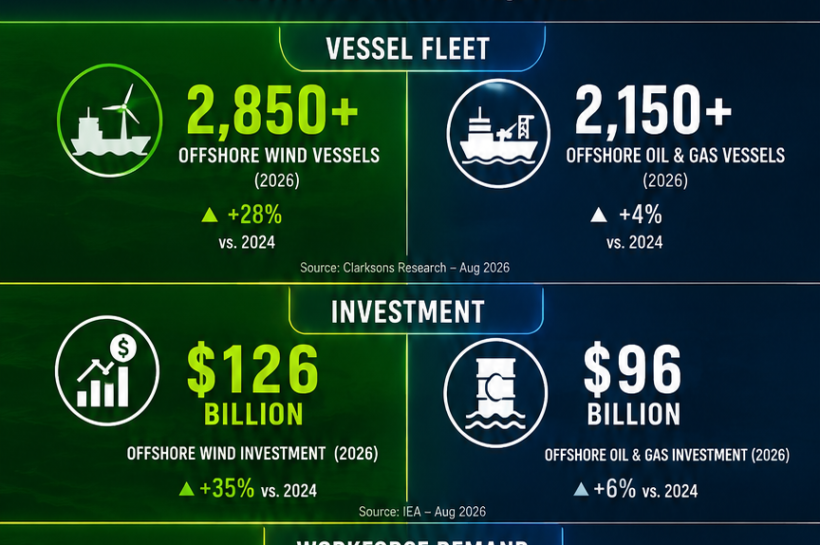
- 🛟 PSV and AHTS: the classic “hour-building” vessels. Day rates are lower, but you get plenty of availability and time on the system.
- 🌬️ OSV, support vessels, and wind farm vessels: standard DP2 shift work.
- 🔌 Cable-laying vessels (CLV): demand precise DP, and senior roles are well paid.
🎯 For a first step, the same blog calls PSV, small OSV, and AHTS-type vessels the most accessible options.
⚠️ This comes from a single industry blog, not an official source. Treat it as a practical guide and confirm with recruiters.
When you apply to any of these companies, send a Live Dynamic CV link instead of a heavy PDF. It looks professional and loads in seconds. 👉 Create your profile now
4️⃣ 🧭 No Experience Yet? How Do I Earn Sea Days?
Sea days only count if they are earned the right way:
- 🏷️ The vessel must be DP classed, with a DP1, DP2, or DP3 notation
- ✍️ Task sections can only be signed by a certified DPO on board
- 🖥️ After Induction, the same blog suggests targeting DP2 PSV/AHTS contracts, which give the most console time under supervision
- 📒 Document every day in your logbook with Master or DPO signatures
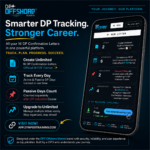
💡 Pro tip: a clean record is worth as much as the days themselves. Keep your logbook tidy and your letters safe, and track your profile in one place. 👉 Smart Crewing
5️⃣ 🔥 Build Your Offshore CV: The Live Dynamic CV
A normal PDF CV is old the moment you send it. A Live Dynamic CV is different.
✨ Why It Works
- 🔗 One link for every application. No more CV_final_v9.pdf.
- 🔄 Always current. Change something in your profile, and the link you already sent shows the update.
- 📎 Proof built in. Your documents sit in the Certificate Vault.
- ⚡ Fast replies. When a recruiter asks, you answer in seconds.
- 📅 Expiry dates in one place. You always know what to renew next.
🚀 Create It in 4 Steps
1️⃣ Register at app.dynpostraining.com/register
2️⃣ Open Smart Crewing PRO, then Edit Profile Matrix, on the Smart Crewing dashboard
3️⃣ Fill in your details and add your documents to the Certificate Vault
4️⃣ Click Copy Public Link and you’re done
📥 Want to be seen? Send us your link by DM or comment, and we will share your CV in our network. 🌐
👉 Build your Live Dynamic CV now
6️⃣ 🎯 Prepare for the Induction Course
The DP journey begins with the Induction course:
- 🏫 Held at a Nautical Institute accredited centre
- 📆 About 5 days of classroom and simulator training
- 📝 Finishes with an online exam
Review the topics and preparation tips before you arrive. The more you know going in, the more you get out of the course.
🎯 Start preparing here: Training Centre
✅ Your Checklist
| ✅ | Step |
|---|---|
| 📄 | Documents (medical, STCW Basic Safety, BOSIET/HUET) |
| 🎓 | STCW qualification for your department |
| 🚢 | Right vessel type (PSV, small OSV, AHTS) |
| 🧭 | Sea days on DP-classed vessels, logged and signed |
| 🔥 | Live Dynamic CV |
| 🎯 | Course preparation |
🚀 Your First Watch Starts Here
Nobody expects you to know everything on day one. What recruiters do expect is a clear profile, valid documents, and a quick reply. A Live Dynamic CV gives you all three.
Don’t wait until you have “enough” experience. Build your profile now, upload your certificates, copy your link, and be ready when the call comes.
👉 Start now in Smart Crewing
👉 Register for free
👉 Prepare in the Training Centre
Save 🔖 this guide, and share 📤 it with a friend who wants to go offshore.
Note: Vessel and company information comes from an industry blog, not an official source. Entry requirements vary by scheme, employer, and country. Always check current requirements with the Nautical Institute and your training provider.
DPO Education Store
Zero-Fail DP Operations: The Ultimate Outperform the Industry Standards & Exam Prep for Every DPO